The Emails She Kept
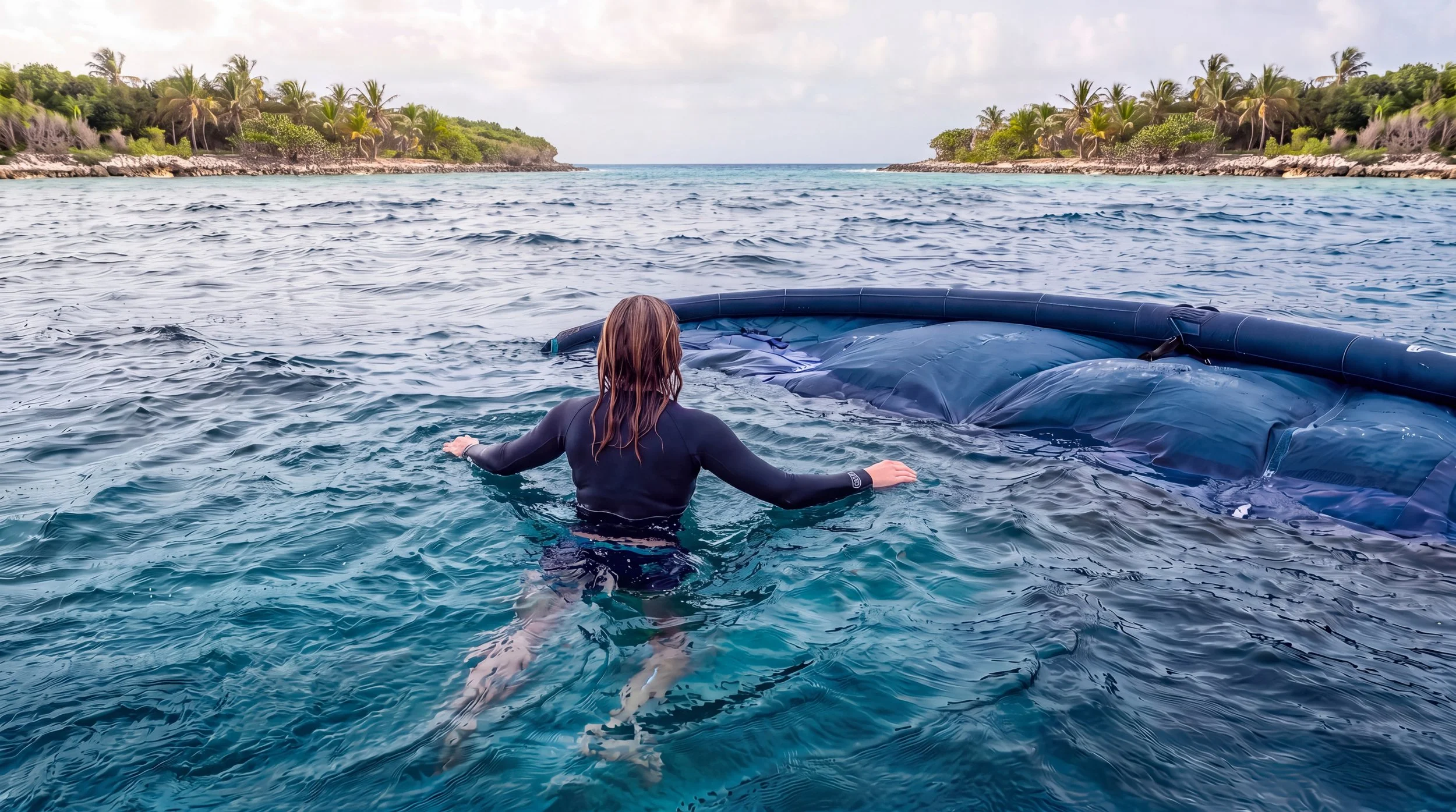
Melanie Perkins spent hours treading water in the channel between two of Richard Branson's private islands. Her kiteboard's sail collapsed and was useless. In those moments, her arms grew heavy as she waited for someone in a boat to notice she was missing. Her leg still carried a scar from an earlier collision with a coral reef, and out there alone she kept reminding herself the risk was still worth it. She'd taken up the sport only months before, and not because she liked it.
She was twenty-six and had never so much as stood on a board before that year. Still, she learned anyway. The reason was that the one investor she couldn't get a meeting with only ever met people at his kitesurfing retreats.
By then, more than a hundred venture capitalists had already told her no. One wrote back plainly that he wasn't comfortable doing a deal in Australia. Perkins was pitching a design company out of Perth, a mining town about as far from Silicon Valley as a place can be. She had no technical cofounder or investor network. All she had at that point was a business that made yearbooks for high schools.
She could have taken the hundred no's as an answer. Some founders would have and kept the yearbook business running, stayed profitable, and let the bigger idea quietly fade away.

She didn't take it as an answer. Her first swing at Silicon Valley was crashing a dinner an investor named Bill Tai was hosting and pitching him something called Canvas Chef: design elements as pizza toppings, document types as the dough. One investor who sat through it later admitted it hadn't been the most polished pitch he'd ever seen. She and her cofounder, Cliff, left with nothing, not even a callback.
So she kept showing up anyway. She spent weeks learning to kitesurf well enough to hold her own at Tai's gatherings, the only room she'd found where the right people were reliably in one place, and went back again and again after the pizza pitch went nowhere. Out on the water that morning, her arms already tired, sail down, waiting for a boat to notice her, she decided the risk was still worth taking. She'd later explain the reasoning with a simple metaphor: once you get a foot in the door, “you have to wedge it all the way in.”

It worked. Through those gatherings, she finally met Cameron, the technical cofounder she'd been missing, and the funding came through not long after. The night Canva actually launched, almost nobody showed up. The engineers who'd stayed up late waiting for a rush of new signups went to bed disappointed. Within a month, fifty thousand people were using it. Within a couple of years, there were millions.
Perkins didn't put the rejections behind her once Canva took off. She kept them, the actual emails, the actual pitch decks, the specific line about not wanting to do a deal in Australia, and built them into the company itself. Every new employee at Canva, seven hundred of them and counting, gets walked through those old rejections on their first day. They witness firsthand the unedited record of how many people looked at the idea and said no.
Sources
• “Canva Uncovered: How A Young Australian Kitesurfer Built A $3.2 Billion (Profitable!) Startup Phenom,”
Forbes — https://www.forbes.com/sites/alexkonrad/2019/12/11/inside-canva-profitable-3-billion-startup-phenom/
• “Canva's Melanie Perkins on How She Turned Her 'Future of Publishing' Idea into a Unicorn,” Entrepreneur —
• “She Was Told 'No' 100 Times. Now This 31-Year-Old Female Founder Runs a $1 Billion Business,”
Entrepreneur — https://www.entrepreneur.com/leadership/she-was-told-no-100-times-now-this-31-year-old-female/310482